Little Ghosts: The Charming Dingbats Font for Creative Projects
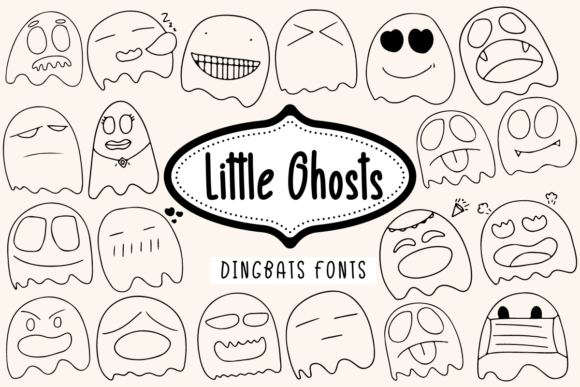
There’s a certain kind of charm that comes from simplicity. In a world saturated with complex, ultra-detailed design assets, the appeal of something clean, friendly, and immediately recognizable is powerful. Little Ghosts is a prime example of this principle in action. It’s a dingbats font, but to label it merely as such misses the point. It’s a collection of personality-packed characters—each one a small, cute, and expressive ghost—designed to be the versatile centerpiece of your creative work. This isn't just a set of ornaments; it's a toolbox for storytelling, branding, and adding a touch of whimsical character to any project.
Understanding the Visual Personality of Little Ghosts
At its core, Little Ghosts is defined by its aesthetic. The characters are simple, rounded forms, evoking a sense of innocence and approachability. They are not spooky or frightening; instead, they are charming, friendly, and full of quiet personality. Think of them as the friendly spirits of your design toolkit. Each glyph in the typeface is a variation on a theme—a ghost with a different expression, pose, or subtle detail. This consistency in style, paired with variety in character, is what makes it so effective. It provides a cohesive visual language without becoming repetitive.
This style sits in a unique space. It’s more structured than a typical handwritten font, yet far more organic and playful than a standard sans serif font. It functions as a display font in the truest sense: its purpose is to be seen, to convey a mood, and to grab attention in a specific, curated way. For a designer, this means Little Ghosts isn't for body text. Its strength lies in headlines, icons, decorative elements, and focal points where personality needs to shine through. Its charm lies in its ability to be both simple and cute, yet charming, making it a surprisingly adaptable asset.
Where Little Ghosts Truly Shines: Practical Applications
The versatility of Little Ghosts is where its real value emerges. As a premium font asset, its applications span a wide range of creative and commercial endeavors. Its friendly demeanor makes it particularly effective in projects aimed at engaging audiences on an emotional level.
For brand identity and logo design, Little Ghosts can establish a brand's personality instantly. Imagine a bakery with a friendly ghost as part of its logo, or a children's educational app using these characters as interactive elements. It communicates approachability, fun, and creativity without a single word. In packaging design, it can turn a product into an experience—think of coffee bags, candle labels, or artisanal goods where the packaging tells a story. The ghosts become recognizable brand ambassadors.
In the realm of publishing and editorial design, this creative font excels. It’s perfect for chapter headings in children's story books, decorative elements in comics, or margin notes in cartoons. For bloggers and content creators, using Little Ghosts in featured images or as social media icons can create a signature look that boosts brand recognition and audience engagement. Its use in social media graphics is particularly potent, as the characters are instantly legible and emotive even at small sizes, enhancing the visual hierarchy of a post.
For entrepreneurs and small business owners, the applications are equally practical. It’s an excellent choice for DIY project materials, craft fair signage, and custom merchandise. A t-shirt design, a set of stickers, or a series of greeting cards featuring these ghosts can become a standout product line. In web design, they can serve as fun loading animations, custom bullet points, or decorative borders that inject personality into a user interface. The key is that Little Ghosts moves beyond mere decoration; it becomes a functional part of the design's communication strategy, influencing visual hierarchy and guiding the viewer's eye in a delightful way.
Making the Most of Little Ghosts: A Practical Guide
Integrating a dingbats font like Little Ghosts into your workflow requires a thoughtful approach to ensure it enhances rather than clutters your design. Here’s how to evaluate its fit and use it effectively.
First, evaluate the project fit. Does the tone of your project align with the font's personality? Little Ghosts works best for brands, products, and content that aim to be friendly, whimsical, nostalgic, or subtly playful. It might not be the right choice for a law firm's annual report, but it could be perfect for a tech startup's internal culture magazine. Always consider your audience. The charm of these ghosts is universally understood, but context is everything.
Next, master the art of font pairing. This is critical. Because Little Ghosts is a strong display font, it needs a complementary partner for readability. Pair it with a clean, neutral sans serif font for body text or a classic serif font for a more traditional feel. The contrast will make the ghosts stand out while maintaining a professional and readable layout. Avoid pairing it with another highly stylized script font or ornate typeface, as this will create visual chaos. The goal is balance—let the ghosts be the stars, supported by a reliable supporting cast.
When you review the included styles, explore the full character map. A quality dingbats font will offer a variety of glyphs. Look for ghosts that can serve different functions: some might be ideal as bullet points, others as standalone icons, and a few might work as decorative borders or dividers. Understanding your full palette allows for more creative and nuanced applications.
Finally, consider the practicalities. Ensure you have the appropriate commercial font license for your intended use, whether for personal projects, client work, or products for sale. Test the font at various sizes to check readability and visual clarity, especially if used in smaller applications like icons or social media graphics. A great design asset is one that is both inspiring and reliable.
In the end, Little Ghosts is more than just a collection of cute characters. It’s a tool for adding a layer of thoughtful, engaging personality to your work. By understanding its strengths and applying it with intention, you can transform it from a simple dingbats font into the centerpiece of a memorable design, creating work that resonates and connects on a human level.