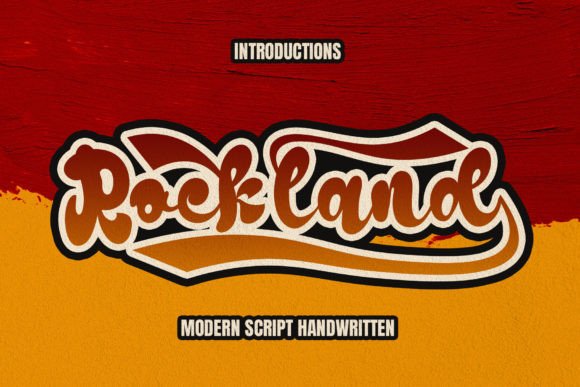
Rockland: Command Attention with a Bold Typeface
When your design needs to shout, whispering with a delicate script font just won’t do. Whether you’re crafting a logo for a new fitness brand, laying out a movie poster, or designing social media graphics that stop the scroll, you need a typeface with presence. This is where Rockland enters the conversation. It’s not just another set of letters; it’s a design asset built for impact. I’ve seen countless projects where the right font choice was the difference between getting noticed and getting ignored. Rockland is engineered to be the former. Its robust structure and vibrant energy make it a go-to creative font for anyone looking to inject power and dynamism into their work.
Anatomy of a Powerful Display Font
Let’s break down what makes Rockland tick visually. At its core, it’s a bold, condensed serif font. The letterforms are tightly packed, which creates a strong, unified visual block. This condensed nature is incredibly practical—it allows you to set impactful headlines without consuming excessive horizontal space, a common challenge in web design and packaging design. The serifs are present but not fussy; they are sturdy and geometric, giving each character a grounded, stable feel. There’s a subtle contrast in stroke weight, but the overall impression is one of solidity and strength. The terminals and finials have a slight rounded quality, which softens the industrial edge just enough to keep it feeling approachable rather than cold. It’s this balance that defines Rockland’s personality: it’s assertive and energetic, but not aggressive.
Think of the typeface as the typographic equivalent of a star athlete. It has the muscle and structure to perform under pressure, but also the agility to adapt to different contexts. The included styles, often ranging from a solid Regular to a heavier Black weight, provide flexibility for creating clear visual hierarchy. You can use the lighter weight for subheadings and the bolder weight for your main headline, establishing a clear and professional rhythm in your layout. This consistency across weights is a hallmark of a well-crafted premium font, ensuring your brand identity remains cohesive across all touchpoints.
Where Rockland Truly Shines: Practical Applications
Understanding a font’s character is one thing; knowing where to deploy it is where the real skill lies. Rockland excels in environments where clarity and impact are non-negotiable. Its sports-inspired DNA makes it a natural fit for team jerseys, athletic apparel branding, and event graphics for marathons or tournaments. The font’s inherent energy translates perfectly to the dynamic world of sports marketing. But its utility extends far beyond the playing field.
In the realm of entertainment, think of movie posters or streaming service thumbnails. Rockland can set the tone for an action-packed thriller or a high-stakes drama instantly. For entrepreneurs and small business owners, consider using it for a bold logo design for a construction company, a gym, or a tech startup that wants to project confidence and innovation. In editorial design, a magazine cover for a men’s fitness or automotive publication would benefit from its commanding headlines. Even in packaging design, a product like a bold hot sauce or a performance energy drink could use Rockland on its label to communicate potency and flavor.
For digital creators and marketers, this font is a workhorse for social media graphics. A YouTube thumbnail, an Instagram story promotion, or a Facebook ad for a flash sale needs to be readable in a fraction of a second. Rockland’s condensed, bold letterforms ensure your message is legible even at small sizes on a mobile screen. It cuts through the noise of a crowded feed. For bloggers and publishers, it can be used sparingly but effectively for chapter titles in a digital ebook or as a standout pull-quote in a long-form article, breaking up text and guiding the reader’s eye.
Making Rockland Work for Your Project
So, you’re considering Rockland for your next project. How do you ensure it’s the right fit? First, evaluate the emotional tone of your work. Does your project need to convey strength, speed, modernity, or a competitive edge? If the answer is yes, Rockland is likely a strong candidate. If your project calls for elegance, whimsy, or handwritten charm, you’d be better served by a script font or a classic serif font with more contrast.
Next, consider font pairing. Rockland, as a bold display font, works best when paired with something more neutral for body text. A clean sans serif font like Helvetica, Open Sans, or Futura provides excellent contrast and ensures readability for paragraphs of copy. The display font grabs attention, while the sans serif delivers the detailed information without causing visual fatigue. Never set large blocks of text in Rockland; its power is in headlines and short, punchy statements.
Before you commit, always test the font with your actual content. Check the kerning and spacing with the specific words you’ll be using. Does “CHAMPION” look as balanced as “VICTORY”? Review all the included glyphs. Does it have the punctuation and special characters your project requires? Finally, if you’re using it for a client project, merchandise, or a product for sale, you must verify the commercial license. Purchasing a font is an investment in your design assets, and respecting the licensing agreement is a fundamental part of professional practice.
In the end, choosing a typeface like Rockland is a strategic decision. It’s about aligning the visual voice of your typography with the message you need to communicate. It’s a tool for building brand recognition, creating immediate visual impact, and engaging your audience on a gut level. When used thoughtfully, it doesn’t just display words; it amplifies their meaning. For the designer, marketer, or creator looking to make a statement, Rockland offers a robust and reliable solution that’s built to perform.