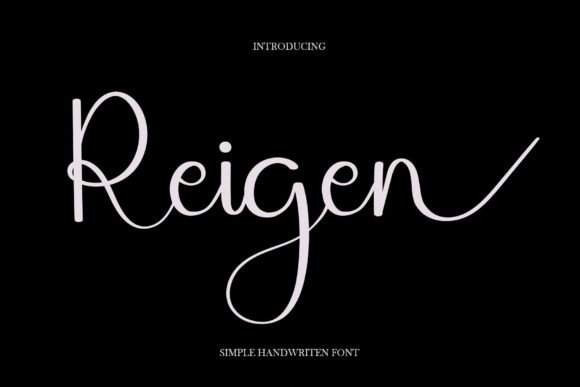
Reigen: Capturing Authenticity in a Digital World
There’s a specific feeling you get when you see a design that actually feels human. In an era dominated by pixel-perfect vectors and rigid grid systems, we are often starved for that organic touch. That is exactly where Reigen enters the conversation. It isn’t just another script typeface; it is a deliberate departure from the structured, calculated norms of modern typography. Reigen is built on the foundation of randomness and free style, mimicking the natural inconsistencies of a hand moving quickly across paper. For designers and brand strategists, this font offers a way to bypass the corporate stiffness that often plagues marketing materials, delivering a message that feels personal, immediate, and genuine.
The Anatomy of Spontaneity
Visually, Reigen sits in that sweet spot between chaotic scribbles and elegant calligraphy. If you look closely at the letterforms, you’ll notice the baseline isn’t perfectly straight, and the stroke weight varies in a way that suggests a real writing instrument—perhaps a felt-tip marker or a soft brush pen. This isn't a "connected" script where every letter joins the next in a cursive flow; rather, it has the character of a print-script hybrid. This distinct personality makes it a standout display font. It commands attention not through loudness, but through texture.
The appeal of a handwritten font like Reigen lies in its imperfections. In design theory, we often chase perfection, but in marketing, we chase connection. Perfection can feel sterile and unapproachable, whereas the slight irregularities of Reigen signal authenticity. It tells the viewer that a real person is behind the message. This is crucial for brand identity work where the goal is to build trust. Whether you are working on packaging design for an artisanal product or creating a header for a lifestyle blog, the visual weight of Reigen grounds the design in reality.
Strategic Applications: Where Reigen Shines
Understanding where to deploy a script font is just as important as choosing the right one. Reigen is versatile, but it has specific strengths that make it shine in particular environments. It is a premium creative font designed for impact, which means it works best in scenarios where large-scale typography is required.
Here are the most effective environments for using Reigen:
- Logo Design and Wordmarks: Because of its unique random style, Reigen creates memorable logo design solutions. It is particularly effective for brands in the wellness, lifestyle, food, or creative sectors. A logo set in Reigen instantly communicates a relaxed, approachable vibe.
- Apparel and Merchandise: The fashion industry relies heavily on typography that feels current. Reigen fits perfectly into the apparel industry, looking great on t-shirts, tote bags, and hoodies. It mimics the look of hand-drawn graphics that are popular in streetwear and boutique fashion.
- Digital Content and Social Media: For YouTube thumbnails, Instagram stories, or website hero sections, Reigen provides the necessary punch. It cuts through the noise of standard sans-serif text. When used for a headline on a landing page, it draws the eye immediately, improving visual hierarchy.
- Editorial and Publishing: In magazine layouts or book covers, specifically for titles and pull quotes, Reigen adds a layer of editorial flair. It works exceptionally well for comic or cartoon titling where the energy needs to be high.
Mastering the Pairing and Hierarchy
One of the most common pitfalls with script fonts is poor pairing. Because Reigen has such a strong personality, using it for body text would be a disaster for readability. It is strictly a display font meant for headlines, sub-headers, and accents. To build a solid visual hierarchy, you need to contrast its organic shape with something structured.
The best practice for font pairing with Reigen is to utilize a clean, geometric sans serif font. The clean lines of a sans serif provide a neutral background that allows the character of Reigen to pop without overwhelming the viewer. For example, pairing Reigen with a light-weight sans serif for your body copy creates a beautiful tension between the organic and the industrial. Alternatively, if you are going for a vintage or editorial look, a sturdy serif font can work well, provided the serif isn't too ornate or decorative, which could clash with Reigen’s free-form style.
Practical Considerations for Professionals
When integrating a premium font like Reigen into your workflow, technical details matter. First, always review the character map and included styles. A high-quality typeface often includes alternates, ligatures, and swashes. Reigen’s "random" style likely relies on OpenType features to swap out letters automatically so that repeating characters (like the double 'o' in "book" or "cartoon") don't look identical. This technical feature is what elevates a font from amateur to professional.
Second, consider your licensing. If you are a freelance designer creating a logo for a client, or a business owner using it for your corporate identity, you must ensure you have the correct commercial font license. This protects you legally and ensures the type foundry is compensated for their work in creating these design assets.
Finally, test for readability at scale. While Reigen is legible at poster sizes, test it on mobile screens if you plan to use it for web design headers. Sometimes, increasing the letter-spacing (tracking) slightly can improve the legibility of handwritten fonts on digital devices. By treating Reigen as a strategic tool rather than just a decoration, you can leverage its unique aesthetic to create designs that resonate deeply with your audience, bridging the gap between digital precision and human touch.