Maybe: The Unpretentious Handwritten Font for Authentic Brands
In a digital landscape saturated with polished perfection, there's a growing hunger for something real. Something with a human touch, a hint of imperfection, and a dash of spontaneity. This is where Maybe, a simple handwritten font created in a random freestyle, finds its power. It’s not trying to be the most elegant script or the most authoritative serif; it’s aiming for a genuine connection. For designers, entrepreneurs, and creators, Maybe offers a versatile tool to inject personality and approachability into a wide array of projects, from a fledgling brand’s logo to a social media campaign that needs to feel personal.
The Character of Maybe: More Than Just Handwriting
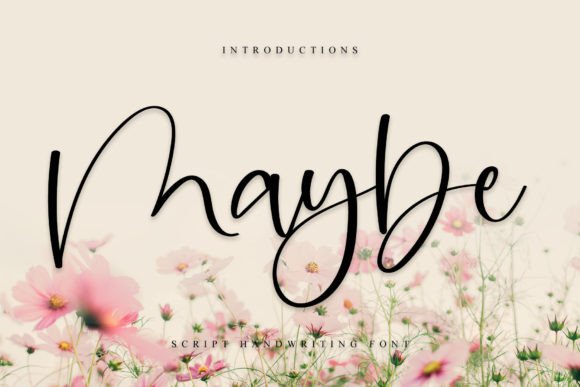
At first glance, Maybe presents as a casual, freestyle script. Its letterforms have the organic flow of someone writing quickly with a felt-tip pen or a brush, resulting in a natural variation in baseline and stroke weight. This isn’t a rigid, formal calligraphy; it’s the kind of writing you’d find in a well-loved notebook or a quick sketch. The overall personality is friendly, approachable, and slightly informal. It avoids the overly whimsical or decorative tendencies of some script fonts, which can limit its use. Instead, Maybe maintains a clarity that makes it surprisingly functional.
What makes it a valuable creative font is this balance. It has enough character to stand out as a display font for headlines or logos, yet it doesn’t sacrifice too much readability for short bursts of text. The random freestyle creation process gives it an authentic, unforced feel that’s difficult to replicate with overly structured typefaces. For a project that needs to convey creativity, warmth, or a DIY ethos, Maybe can be a perfect match. It’s a premium font that feels personal, not corporate.
Where Maybe Truly Shines: Practical Applications
Understanding where a font works is just as important as liking how it looks. Maybe excels in contexts where personality and direct communication are key. Its strength lies in applications where you’re speaking with your audience, not at them.
Branding and Identity: For small businesses, startups, and personal brands, Maybe can form the core of a relatable brand identity. Imagine it used for a local bakery’s logo, a freelance photographer’s watermark, or the packaging for artisanal goods. It instantly communicates a hands-on, authentic quality. Paired with a clean sans serif font for body text, it creates a balanced and modern typographic system that feels both professional and human.
Digital and Social Media: In the fast-scrolling world of Instagram, YouTube, and TikTok, grabbing attention with a personal touch is crucial. Maybe is ideal for social media graphics, quote overlays, story templates, and YouTube thumbnails. It makes content feel like it’s coming from a real person, boosting engagement. For a blog or a newsletter, using Maybe for pull quotes or section headers can break up the monotony of body text and guide the reader’s eye in a friendly way.
Editorial and Publishing: While not suited for long-form book text, Maybe has a place in editorial design. Think of magazine feature titles, chapter headings in a lifestyle cookbook, or the cover of a young adult novel. It can add a contemporary, informal vibe that appeals to specific demographics. For self-published authors or indie publishers, it’s a tool to create distinctive covers and interior elements that stand out from mainstream publishing templates.
Apparel and Merchandise: The font’s handwritten style translates exceptionally well to apparel. It’s perfect for t-shirt slogans, tote bag designs, and hat embroidery. The casual, freestyle nature of Maybe feels at home on clothing meant for everyday wear, avoiding the stiff look of more traditional typefaces.
Making the Right Choice: Using Maybe Effectively
Choosing a font like Maybe requires a bit of practical evaluation. First, consider your audience and message. If your project demands utmost formality, precision, or a luxurious, timeless feel, a script font like this may not be the right fit. However, if you’re targeting a younger demographic, a creative community, or want to emphasize authenticity, it’s worth serious consideration.
Next, test it rigorously. Don’t just look at the name “Maybe” in isolation. Set your actual headlines, taglines, and key phrases. Check the readability at the sizes you’ll use. How do the letter combinations look? Does the flow feel natural for your specific words? A critical step is evaluating font pairing. Maybe typically pairs best with a simple, geometric sans serif or a neutral serif font. The contrast between the organic, irregular handwritten font and a clean, structured companion font creates visual interest and ensures body text remains highly legible. Avoid pairing it with another ornate or highly stylized font, which can create visual chaos.
Review the font package details. A quality commercial font like Maybe should include a full character set—uppercase, lowercase, numbers, punctuation, and common symbols. Some premium versions might include stylistic alternates, ligatures, or multiple weights (like a regular and a bold), which can expand your creative options. Always confirm the licensing. For commercial projects—whether it’s a client logo, a product for sale, or monetized content—you need to ensure the license covers your intended use. This is a non-negotiable step in professional design work.
Beyond the Font: Building a Visual System
Remember, a font is just one component of a larger design system. Maybe shouldn’t carry the entire typographic load of a complex project. Its role is often as a headline or accent font. The real magic happens when you integrate it thoughtfully with other design assets—color palettes, imagery, and layout principles. Use it to highlight key information, evoke a specific emotion, or create a focal point. Its strength is in its ability to inject a burst of personality where it’s needed most.
In the end, Maybe is more than just a handwritten font. It’s a design tool for adding a layer of human connection. In a world of algorithms and automation, that simple, freestyle touch might be exactly what your next project needs to feel genuinely engaging and memorable. It’s a reminder that sometimes, the most effective design isn’t about perfect precision, but about authentic expression.