Balloons: The Handwritten Font That Brings Instant Warmth
Every designer has faced the challenge of finding a typeface that feels genuinely approachable. Too often, fonts on the market feel sterile, overly technical, or try too hard to be edgy. When you are designing for a brand that values connection, fun, or a human touch, you need something that doesn't look like it was generated by a machine. Enter Balloons, a sweet and friendly handwritten display font that cuts through the noise of modern typography. It isn't just a set of characters; it’s a distinct voice. It mimics the natural imperfections and flow of human handwriting, offering a visual warmth that instantly lowers the barrier between the brand and the audience.
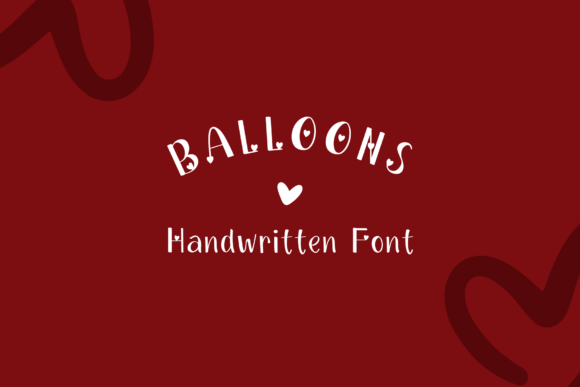
The visual personality of Balloons is defined by its buoyant, rounded letterforms. It avoids the jagged edges often found in rougher script fonts, opting instead for a smooth, legible aesthetic that feels inviting rather than messy. This isn't the font you use for legal disclaimers or body text in a technical manual. It is a premium font designed for impact and emotion. The strokes have a natural weight variation that mimics a felt-tip marker or a smooth gel pen, creating a rhythm that guides the eye effortlessly across the page. It strikes a delicate balance: it is clearly a display font, meaning it commands attention at larger sizes, but it maintains a level of clarity that many other handwritten typefaces lack.
Why Handwritten Fonts Matter in Brand Strategy
In an era of digital saturation, authenticity is the most valuable currency for a brand. Consumers are increasingly skeptical of corporate polish. They crave realness. This is where a creative font like Balloons becomes a strategic asset rather than just a decorative element. By incorporating a handwritten font into your brand identity, you are signaling that there are real people behind the logo. It suggests a human touch in your customer service, a personal approach to your content, and a willingness to be vulnerable.
Consider the psychological impact on your audience. A sharp, geometric sans serif font can feel authoritative and cold. A traditional serif font feels established and serious. However, a typeface like Balloons triggers associations with creativity, joy, and spontaneity. For a small business owner or a content creator, this visual cue is powerful. It tells a story before the audience has even read a single word of your copy. It sets a mood. If your brand voice is friendly, helpful, and a little bit playful, your typography needs to reflect that immediately.
Strategic Applications: Where Balloons Fits Best
Understanding the right context for a display font is crucial for professional results. Because Balloons is a handwritten font, it thrives in environments where personality is prioritized over density. It is an exceptional tool for packaging design, particularly for products in the artisanal, food, or beauty sectors. Imagine a jam label, a scented candle box, or a boutique soap wrapper; using this font for the product name instantly communicates "homemade" and "crafted with care."
It is equally effective in the digital space. For web design, you wouldn't use it for your navigation menu or your terms of service. However, for hero section headers or call-to-action buttons, Balloons draws the eye and softens the user experience. It makes a website feel less like a transaction and more like a conversation. Similarly, for social media graphics, where the scroll speed is lightning-fast, this font stops the thumb. It creates a distinct visual signature that can help with brand recognition and consistency across platforms like Instagram, Pinterest, and TikTok.
Elevating Print and Editorial Design
While digital is important, print is where Balloons truly shines. In editorial design, such as magazines or lookbooks, it works beautifully for pull quotes and subheadings that need to feel intimate. It breaks up the monotony of standard text blocks and adds a layer of visual interest. For personal projects, its utility is undeniable. It is the perfect choice for writing wedding invitations, birthday cards, or scrapbooking layouts. The font carries a celebratory vibe that formal serif or sans serif options simply cannot replicate. It makes an invitation feel like a personal letter from a friend, which is exactly the tone most hosts want to set.
Mastering Font Pairing and Hierarchy
One of the most common mistakes in design is using a creative font in isolation or pairing it with the wrong partner. A handwritten font like Balloons needs a grounding element to maintain professionalism and readability. Because it has a lot of personality, it requires a "quiet" partner. The best approach is to pair it with a clean, neutral sans serif font. Think of fonts like Helvetica, Open Sans, or Lato. These typefaces act as the workhorse for your body text, handling the heavy lifting of information transfer, while Balloons handles the emotional heavy lifting as the headline.
Visual hierarchy is about guiding the viewer's attention. You want the eye to go to the most important element first. Use Balloons for your H1 or H2 headers to establish the topic and the mood. Then, switch to your sans serif for the details. This contrast creates a dynamic layout that feels both organized and energetic. If you pair a handwritten font with another decorative or script font, the result often looks cluttered and amateurish. Simplicity is key. Let the charm of Balloons stand out by giving it space and a simple background.
Practical Considerations for Designers and Creators
Before integrating any new design assets into your workflow, a practical evaluation is necessary. First, consider the specific style variations included with the Balloons font package. Many premium fonts come with alternate characters, ligatures, or swashes. These features allow you to customize the text so that two instances of the same letter don't look identical, which enhances the authentic handwritten feel. Experimenting with these OpenType features can elevate a standard layout to something bespoke.
Readability testing is non-negotiable. While Balloons is designed to be legible, all display fonts have a threshold. Test the font at the size you intend to use it. If you are designing for mobile web design, check it on smaller screens to ensure the character spacing doesn't cause letters to merge. If you are designing for print, print a physical proof. Screens often render light weights differently than ink on paper.
Finally, address the commercial licensing. If you are a freelancer, a small business owner, or a hobbyist looking to sell your crafts, you must ensure you have the correct license for the Balloons typeface. Most licenses distinguish between personal use (hobbyist projects) and commercial use (selling products, client work, or merchandise). Using a font commercially without the proper license is a risk to your business reputation. Always read the EULA (End User License Agreement) to understand if the license covers your specific application, such as embedding the font in an eBook or using it on physical merchandise like t-shirts or mugs.
Conclusion
Choosing a typeface is a decision that affects how your message is received. Balloans is more than just a sweet font; it is a tool for connection. It bridges the gap between a brand and its community through visual warmth and approachability. Whether you are designing a wedding invitation, launching a new product line, or refreshing your social media strategy, this handwritten font offers a reliable way to inject fun and humanity into your work. It proves that professional design doesn't have to be stiff—it can be as light and joyful as a balloon.