Quick: The Bold Script Font for Impactful Design
When a project needs to stop the scroll, grab attention, and make a statement, the choice of typeface is critical. Not every font has the personality to do the heavy lifting required in competitive spaces like social media feeds, packaging shelves, or hero banners. This is where a premium font like Quick enters the conversation. It is a robust yet elegant script designed specifically for impact. Unlike delicate calligraphy scripts that fade into the background, Quick is engineered to be the focal point. It bridges the gap between the organic warmth of a handwritten font and the structured confidence of a display font, making it a versatile tool for anyone looking to inject energy into their visual content.
Visual Characteristics and Personality
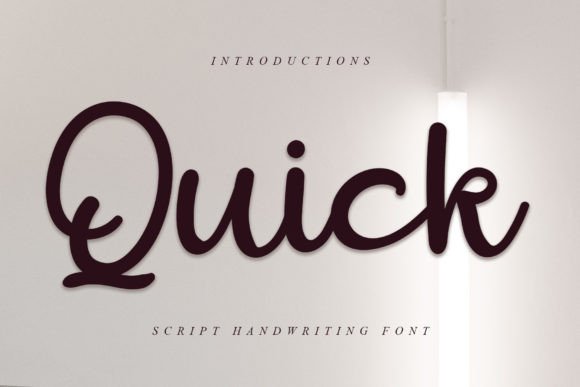
At its core, Quick is defined by its fluid motion and substantial weight. In modern typography, we often see a shift toward authenticity; audiences want to feel a human touch, even in commercial design. Quick delivers this through its brush-like strokes. The letterforms have a natural irregularity that suggests they were drawn by hand, yet they are refined enough to maintain legibility at various sizes. This balance is difficult to achieve. Many script fonts are either too messy to read or too stiff to feel genuine. Quick sits in the sweet spot, offering a vibrant, energetic vibe without sacrificing the clarity needed for professional communication.
The visual appeal of Quick lies in its versatility. It possesses a "bold feel" that makes it ideal for headlines, but it retains an elegance that prevents it from looking aggressive. Imagine a logo design for a boutique coffee shop or a lifestyle brand; Quick provides that instant recognition of personality. It tells the viewer, "We are creative, we are approachable, and we are confident." This creative font is not just a set of letters; it is a design asset that adds immediate character to any project it touches.
Strategic Applications: From Branding to Social Media
Understanding where to deploy a font like Quick is just as important as choosing it. Its robust nature makes it a powerhouse for specific applications where visibility is key.
For brand identity, Quick can serve as the primary typeface for logos, especially for businesses in the fashion, food, beauty, or creative industries. A serif font or sans serif font is excellent for body copy, but the brand mark—the logo itself—often needs more flair. Quick provides that distinctiveness. It helps brands stand out in crowded markets by offering a visual voice that feels distinct and memorable.
In editorial design and packaging design, hierarchy is everything. You need to guide the reader’s eye from the headline to the sub-headline and finally to the body text. Quick excels as a headline font. Whether it is the title of a magazine cover, the main call-out on a product box, or a header on a website, it commands attention. Its thick strokes ensure it pops against complex backgrounds, making it a favorite for web design hero sections.
Furthermore, the rise of visual platforms has made social media graphics a daily necessity for marketers and entrepreneurs. Quick is perfectly suited for Instagram stories, quote cards, and promotional banners. The font's energy translates well to fast-paced digital environments. It reads well on mobile screens because of its bold construction, ensuring your message isn't lost when users are quickly swiping through content.
Practical Guidance for Implementation
Choosing a commercial font involves more than just aesthetics; it requires practical consideration of how the typeface functions in real-world scenarios. Here is how to get the most out of Quick.
Evaluating Project Fit and Font Pairing
Quick is a high-energy font. While it is excellent for highlights, using it for long paragraphs of body text would be a mistake. The eye tires quickly from reading connected scripts over large blocks of text. Instead, use it strategically for headlines, logos, and call-to-actions. For the supporting text, you need a strong font pairing. Because Quick is expressive, it pairs best with clean, neutral typefaces. A geometric sans serif font or a classic serif font provides the perfect counterbalance. The contrast creates a professional look: the script adds personality, while the body font ensures readability and structure.
Readability and Hierarchy
When implementing Quick, pay close attention to kerning and leading. As a script font, the connections between letters are crucial. Ensure the font size is large enough that the details of the brush strokes are visible. If the font becomes too small, the ink traps may fill in, and the text will look muddy. Use Quick to establish the top tier of your visual hierarchy. It should be the first thing the viewer sees, drawing them into the content that follows in a more standard typeface.
Licensing and Usage
Before using any design assets in a commercial capacity, reviewing the license is non-negotiable. Quick is a professional tool, and its licensing typically covers a wide range of uses—from digital ads to printed merchandise. However, always verify the specific terms regarding the number of users or the scope of the project (e.g., embedding in apps or large-scale print runs). Investing in a legitimate license protects your business and ensures you have access to all the glyphs and styles the font offers.
Conclusion
For designers, entrepreneurs, and content creators looking to add a vibrant touch to their work, Quick offers a reliable solution. It combines the raw appeal of handwritten fonts with the professionalism required for high-stakes branding. By understanding its strengths in logo design, packaging design, and web design, you can use this typeface to create projects that don't just look good, but effectively communicate your brand's unique energy. Whether you are refreshing a website or launching a new product line, Quick is a font designed to make your message heard.