Iceberg: A Cool Slab Serif for Bold Branding
The Distinctive Look of Iceberg
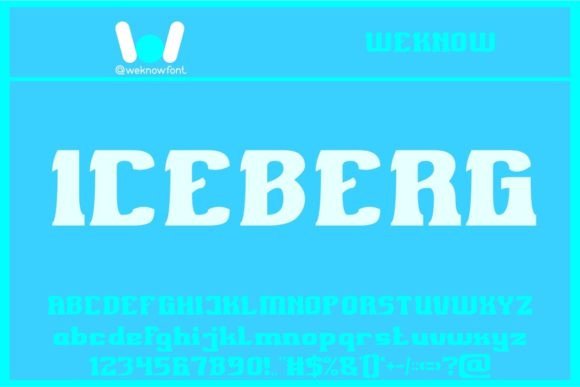
There is a specific kind of design challenge that calls for a typeface with serious weight but without the stuffiness of a traditional serif. You want something that feels contemporary, perhaps a bit geometric, but with the structural integrity of a classic slab. Enter Iceberg. At first glance, this typeface presents itself as a fancy cartoon slab serif, but that description barely scratches the surface. It is a display font that balances stability with a distinct, stylized personality. The letterforms feature sturdy, block-like serifs that ground the text, yet the terminals and curves possess a subtle softness that prevents the font from feeling too rigid or industrial.
The visual character of Iceberg is defined by its high legibility at large scales and its ability to hold its shape even in complex compositions. It isn't a delicate script font or a fleeting handwritten font; it is built to stand on its own. The strokes are generally uniform in width, giving it a modern typography feel, while the slightly squared-off curves add a touch of playfulness. This unique combination makes Iceberg an excellent candidate for projects where you need to convey confidence and approachability simultaneously.
Strategic Applications: Where Iceberg Shines
When selecting a premium font for a project, the context dictates the choice. Iceberg excels in environments where immediate visual impact is necessary. If you are working on logo design, this typeface offers a solid foundation. Because it functions so well as a display font, it creates an immediate focal point, allowing a brand mark to be recognizable at a glance. For entrepreneurs building a brand identity, using Iceberg for the primary wordmark ensures that the brand feels established and substantial from day one.
Beyond static logos, consider the dynamic world of digital content. For web design, specifically in hero sections or landing pages, Iceberg can be used for headlines to anchor the visual hierarchy. It draws the eye downward, encouraging visitors to engage with the content that follows. Similarly, in the realm of social media graphics, where the competition for attention is fierce, a bold commercial font like Iceberg cuts through the noise. Whether it is a thumbnail for a YouTube video, a promotional post for Instagram, or a header image for a blog, the font’s cartoon-slab aesthetic ensures that the text remains readable even on small mobile screens.
It is also worth noting the versatility of Iceberg in editorial design and packaging design. For book covers, particularly in genres like young adult fiction, adventure, or non-fiction that requires a bold voice, this typeface provides the necessary drama. In packaging, especially for products targeting a younger demographic or items that want to convey a sense of fun and durability, Iceberg serves as a reliable choice. It works beautifully on merchandise, apparel, and posters, bridging the gap between functional typography and artistic expression.
Technical Considerations and Font Pairings
A font rarely works in a vacuum. To get the most out of Iceberg, you must consider how it interacts with other design assets. As a rule of thumb, display fonts with strong personalities require a complementary partner for body text. Because Iceberg has a significant visual presence, pairing it with a neutral sans serif font is often the safest and most effective strategy. A clean, geometric sans serif allows the headlines to pop without creating visual clutter. Avoid pairing it with another decorative serif font or a complex script font, as this will likely result in a chaotic layout that confuses the reader.
Readability is another crucial factor. While Iceberg is designed for clarity, it is best utilized for headlines, subheadings, and callouts rather than long blocks of body copy. In the context of web design, using Iceberg for H1 and H2 tags establishes a clear visual hierarchy, guiding the user’s eye through the page structure. For print applications like magazine layouts or flyers, the same principle applies; use the font to create impact, then switch to a simpler typeface for the detailed information.
For those concerned with licensing and usage rights, it is always prudent to review the specific terms associated with the Iceberg font files. Most premium font licenses cover a wide range of applications, from digital assets to physical merchandise, but verifying the details ensures that your brand identity remains legally sound across all platforms. When testing the font, always view it in the specific medium where it will live. A typeface can look vastly different on a high-resolution Retina screen compared to a printed coaster, so proofing your work is a non-negotiable step in the design process.
Ultimately, choosing a typeface is about finding the right voice for the message. Iceberg offers a voice that is strong, modern, and slightly whimsical, making it a valuable tool in the arsenal of any designer, marketer, or content creator looking to make a lasting impression.