Arthona: Crafting a Medieval Fantasy Aesthetic
When a project demands more than just text on a page—when it needs to whisper of ancient secrets, epic battles, or timeless elegance—the choice of typeface becomes critical. This is where a font like Arthona steps in, not as a mere tool, but as a foundational element of your narrative. It’s a premium serif display typeface engineered for impact, designed to evoke a specific, powerful atmosphere the moment it’s seen.
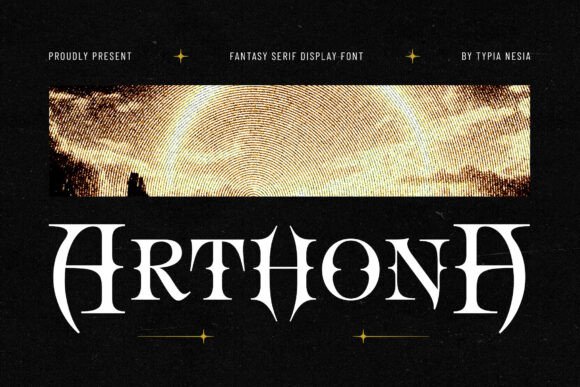
Arthona isn’t a quiet, background player. Its personality is unmistakable. Imagine the sharp, decisive strokes of a quill pen translated into digital precision. The letterforms feature strong Gothic and medieval influences, with serifs that are more architectural than ornamental. They taper to points, creating a sense of tension and focus. This isn’t a friendly, rounded font; it’s a typeface with a clear point of view, one that suggests authority, mystery, and a connection to history or fantasy worlds. The overall appeal lies in its ability to be both classic and commanding, offering a visual weight that grounds a design in a specific, evocative mood.
Where Arthona’s Character Truly Shines
Understanding a font’s personality is one thing; knowing where to deploy it is the practical challenge. Arthona excels in contexts where a strong, immersive visual identity is the goal. For entrepreneurs and creators in specific niches, this typeface can become a cornerstone of their visual language.
- Publishing & Editorial Design: This is Arthona’s natural habitat. Think book covers for fantasy, historical fiction, or epic poetry. Its sharp serifs and unique letterforms create immediate genre recognition. It works brilliantly for title treatments on posters and magazine covers, establishing a powerful hierarchy that draws the eye.
- Music & Entertainment Branding: The font’s mystical edge makes it ideal for metal band logos, album art, and movie titles. It conveys intensity and depth, perfect for genres that build entire worlds through their aesthetic. Video game developers can use Arthona for title screens, in-game logos, or UI elements within fantasy or RPG settings to enhance immersion.
- Logo Design & Brand Identity: For a business or product with a story rooted in craftsmanship, tradition, or the arcane—think a specialty meadery, a historical tour company, a bespoke armor maker, or a dark academia-themed stationery brand—Arthona provides a logo font that is instantly recognizable and rich with connotation.
- Specialty Print & Packaging: Imagine a luxury chocolate bar with a Gothic-inspired name, or a candle brand with a line of “Enchanted Forest” scents. Arthona on the packaging design tells the customer exactly what kind of experience they’re buying into before they even read the description.
- Digital & Social Media: While primarily a display font, it can be used strategically for major headlines on websites or as bold, arresting text in social media graphics to stop the scroll. It’s less suited for body copy but perfect for making a statement.
Practical Guidance for Using a Font Like Arthona
Integrating a strong display font into your projects requires more than just installation. It’s about making intentional choices that serve the design’s purpose.
Evaluate the Project Fit First. Before falling in love with its look, ask: Does this project’s tone align with Arthona’s personality? Using a Gothic serif for a children’s birthday party flyer would create a jarring disconnect. Its strength is its specificity, which is also its limitation. It’s a specialist, not a generalist.
Master Font Pairing. This is crucial. Arthona’s detailed, high-contrast forms demand a counterpart that complements without competing. A clean, geometric sans serif font for body text is often a winning combination, providing necessary breathing room and modern readability. For a more nuanced feel, a simple script font or a handwritten font with consistent line weight could be used for accents. Avoid pairing it with another highly decorative serif or a script with excessive swashes, as this leads to visual chaos.
Leverage Its Features. A quality creative font like Arthona often includes alternates, ligatures, and multilingual support. Don’t overlook these. Swapping a standard ‘A’ for an alternate can refine a logo. Using a ligature where letters connect can add authenticity to a medieval-themed design. These details elevate work from competent to considered.
Consider Readability and Hierarchy. As a display font, Arthona is designed for impact at large sizes. Use it for headlines, logos, and pull quotes. Never set a paragraph of body text in it; the intricate details that make it beautiful at 48pt will become visual noise at 12pt. Your visual hierarchy should use Arthona as the top tier, supported by highly legible secondary and tertiary typefaces.
Review Licensing for Commercial Use. If you’re a small business owner or a marketer creating assets for sale or promotion, ensure you have the correct commercial font license. Most premium fonts require a license for commercial use, whether for a client project, product packaging, or monetized YouTube videos. Reputable foundries provide clear licensing information.
In the end, choosing a font like Arthona is a strategic decision. It’s about selecting a design asset that does more than display words—it helps tell your story. By applying it thoughtfully, respecting its character, and pairing it wisely, you can harness its power to create a cohesive, professional, and deeply engaging brand identity or creative project that resonates with your audience on a visceral level.